True Music Fund

PB&JAM: The Bucharest Live Music Project Bringing Musicians Together

Moving to a new country and trying to break into the live music industry can feel overwhelming, especially when opportunities don’t come easily. For PB&JAM founder Uliana Τsukanova , that challenge became the starting point for building something entirely new.

After relocating to Romania following her Master’s degree in Music Business at Berklee College of Music, she began working with independent artists across promotion, marketing campaigns, and social media while searching for her place within the local music ecosystem.

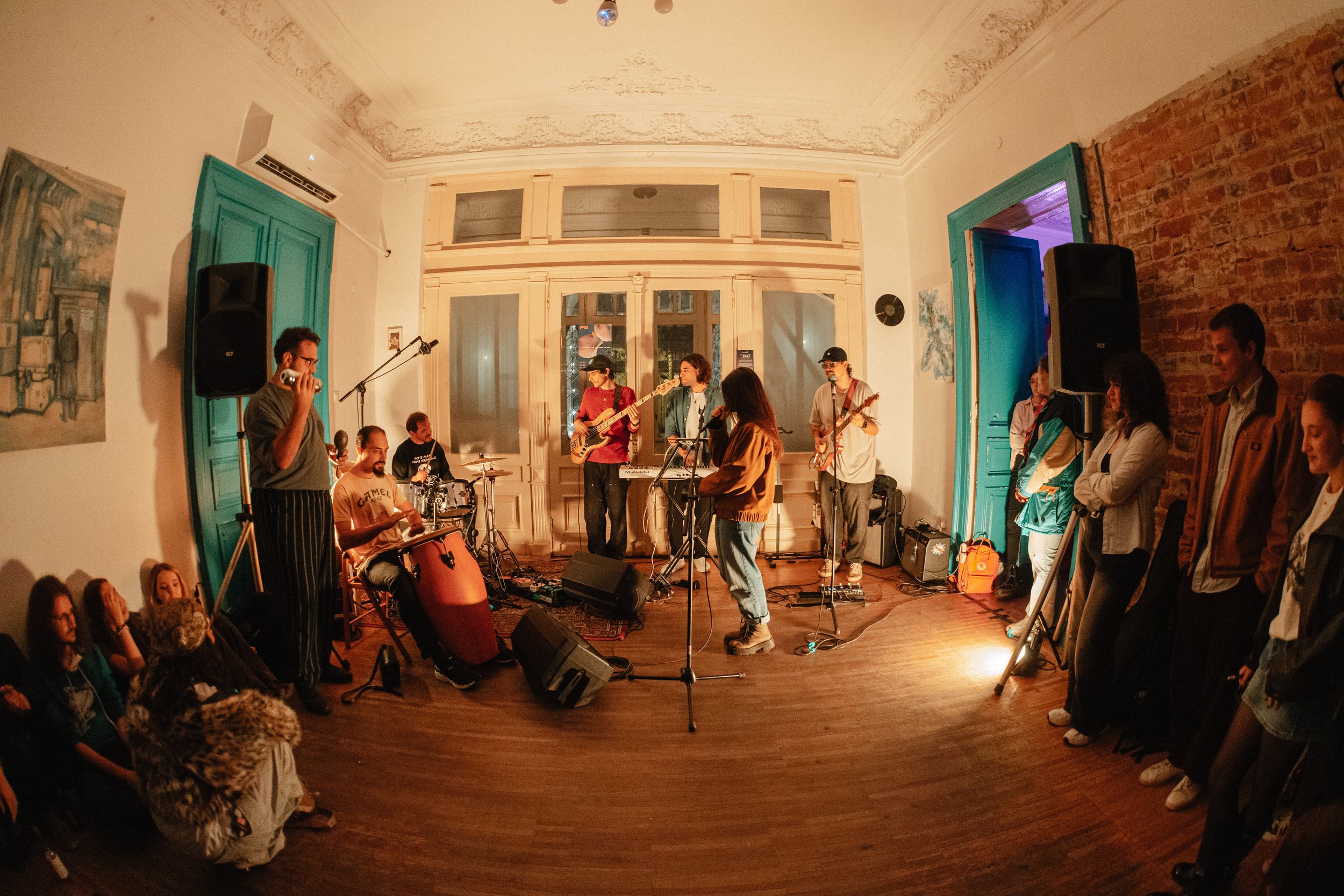
Rather than waiting for opportunities to appear, Uliana created one from scratch. What started as a simple idea — building a space where musicians could perform collaboratively without the stiffness of a traditional cover-band setup — has since evolved into one of Bucharest’s most exciting community-led live music concepts. Sitting somewhere between a live concert and an open jam session, PB&JAM has quickly built a reputation for its spontaneous energy, genre-crossing performances, and emphasis on human connection through music.

Supported through the shesaid.so x Ballantine’s True Music Fund, the project has also become a reflection of Uliana’s wider journey: learning to trust her instincts, lead with confidence, and carve out space in an industry that often asks emerging founders — particularly women — to constantly prove themselves.

PB&JAM sits between a live show and a jam session. What inspired you to create the event?

It is indeed a unique format. The idea was born from asking myself, as an amateur singer, a simple question: “Where can I sing my favorite songs live without making musicians feel like part of a cover band?” There weren’t many options in Bucharest, so I decided to start my own project.

I analyzed what each format lacks and what it offers. Freestyle jamming is peak musicianship and offers a lot of creative freedom, but it can feel slightly unwelcoming and limits the number of songs you can come up with on the spot. A program made entirely only of pre-requested songs gives a sense of security and expands the repertoire, though it takes away the fun of spontaneity.

We took the best parts of both and created a great mix where musicians have both direction and room for improvisation. You perform your favorite tune while spicing it up with solos and riffs, treating the song more as “content.” And the jamming breaks we include are for true fans of classic jams, which are equally exciting every single time.

We keep hearing “This is the exact format the city needed,” and we are glad to have filled that niche.
You were part of the 2025 shesaid.so x Ballantine’s True Music Fund. What has that support enabled that you couldn’t have done otherwise?

I am very grateful for this support, and PB&JAM wouldn’t have started so soon. The financial help was exactly what we needed to cover the first season, bringing the best musicians into the house band and fairly paying our designer, engineer, and technician.

Apart from the financial aspect, I was guided by my mentor, Andreea, along the way, and the insights she shared definitely improved the quality of our events, especially from a marketing standpoint. She also gave advice on how to sustain the project, pitch it to future sponsors, and establish timelines.

Finally, being selected for the fund was a great boost that validated the idea and helped us execute it in the best possible way.

You describe the event as “planned but not rehearsed”. Can you explain more about what this means?

Of course! We have a PB&JAM chat where musicians share song suggestions, and other instrumentalists decide to join on the day of the event. However, there are no rehearsals, so the magic happens on the spot.

As a result, we compile a list of songs, and people get on stage – often without having ever played together before. Throughout the performance, we hear instrumental solos, vocal runs, and sometimes musicians even switch while playing.
You’re bringing together musicians from very different backgrounds; what tends to happen when those worlds meet on stage?

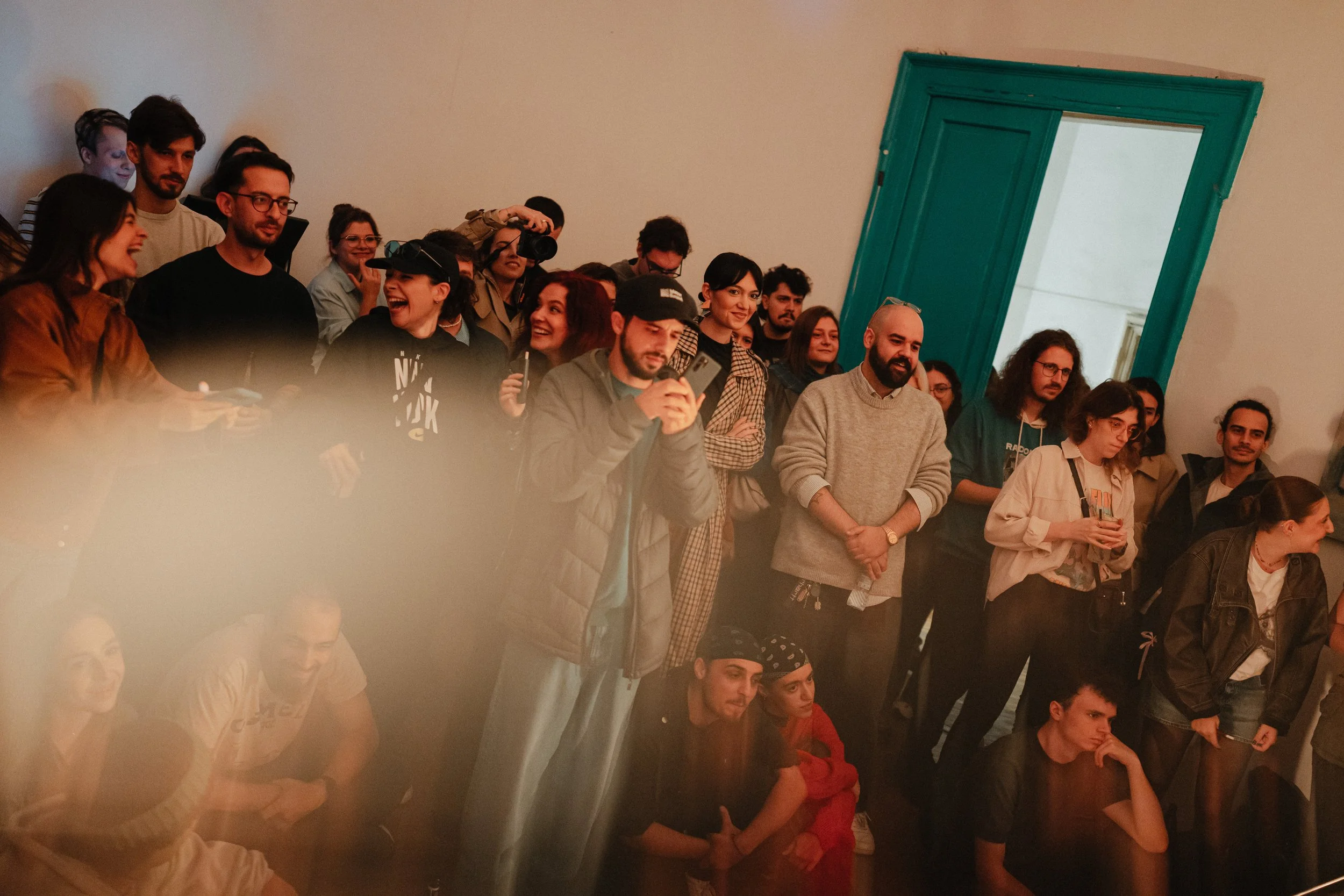
Our events have just proved once again: music is a universal language. Two people can have completely different levels of music theory knowledge, come from different cultures, or even have slight misunderstandings in their second language (mostly English), but the moment one sits behind the drum set and another puts a bass over their shoulder, they are on the same page. All that’s needed is eye contact and an occasional nod – it is a truly beautiful thing.

At the same time, different backgrounds bring new rhythms and a unique spark. We’ve had Chilean musicians bringing Latin grooves to the stage, Romanian musicians playing traditional instruments, and a whole Moldovan band trading back-to-back solos with our house guitar player. Music unites people, and no matter how much the world tries to drive us apart nowadays, we need this human connection.

What have you learned from building PB&JAM so far, both creatively and in how people engage with it?

PB&JAM has so far been the most validating, important experience for me as an industry professional. I had to do things I never thought I would. For example, creating a visual identity with our designer to convey this robust, fun energy we’d like people associate PB&JAM with. I dealt with community management and learnt how to establish rules and instructions in a precise yet friendly way. I even learned how to host events without having done it before – there is still room for growth here :) Also, promoting events to the audience proved that there is no such thing as overadvertizing – people will forget about your project if you don’t remind them. Finally, most importantly, building PB&JAM helped with my confidence in my skill set and showed that I should trust myself more.

Top tip to someone looking to build their own community-led music project.

To that someone and self: stop overplanning and start doing. You can think, analyze, research, and brainstorm for years and yet things will still go wrong somewhere along the way.

No one is immune to that. “I just need to study it a bit more” is the excuse all overthinkers justify their inaction with, including myself, but you have to consciously jump out of this trap asap. The music industry, and especially events, are hands-on focused, so starting now and improving later is the mentality that will save you many many regrets.

And a more precise advice for community-led music projects: don’t give up your boundaries. People will try to tell you what to do, especially if you are a woman. It is very important to trust your own vision and not lose the authority in your own project. It takes one disrespectful comment being ignored to create a climate of total permissiveness.

Leading something comes with responsibility, and you have to proudly carry it. Everybody makes mistakes but at least it will be YOUR mistake. And if you hear healthy criticism, be open and adapt for the better future of your project – just don’t confuse it with bending under pressure due to lack of confidence or experience. Believe in your own power more – your audience needs you to. 


PB&JAM on Instagram

** PB&JAM has just kicked off its second season: the 2nd event took place on May 25th. Currently, the team is looking for a new sponsor to continue nurturing the Romanian live music scene while keeping the event accessible.

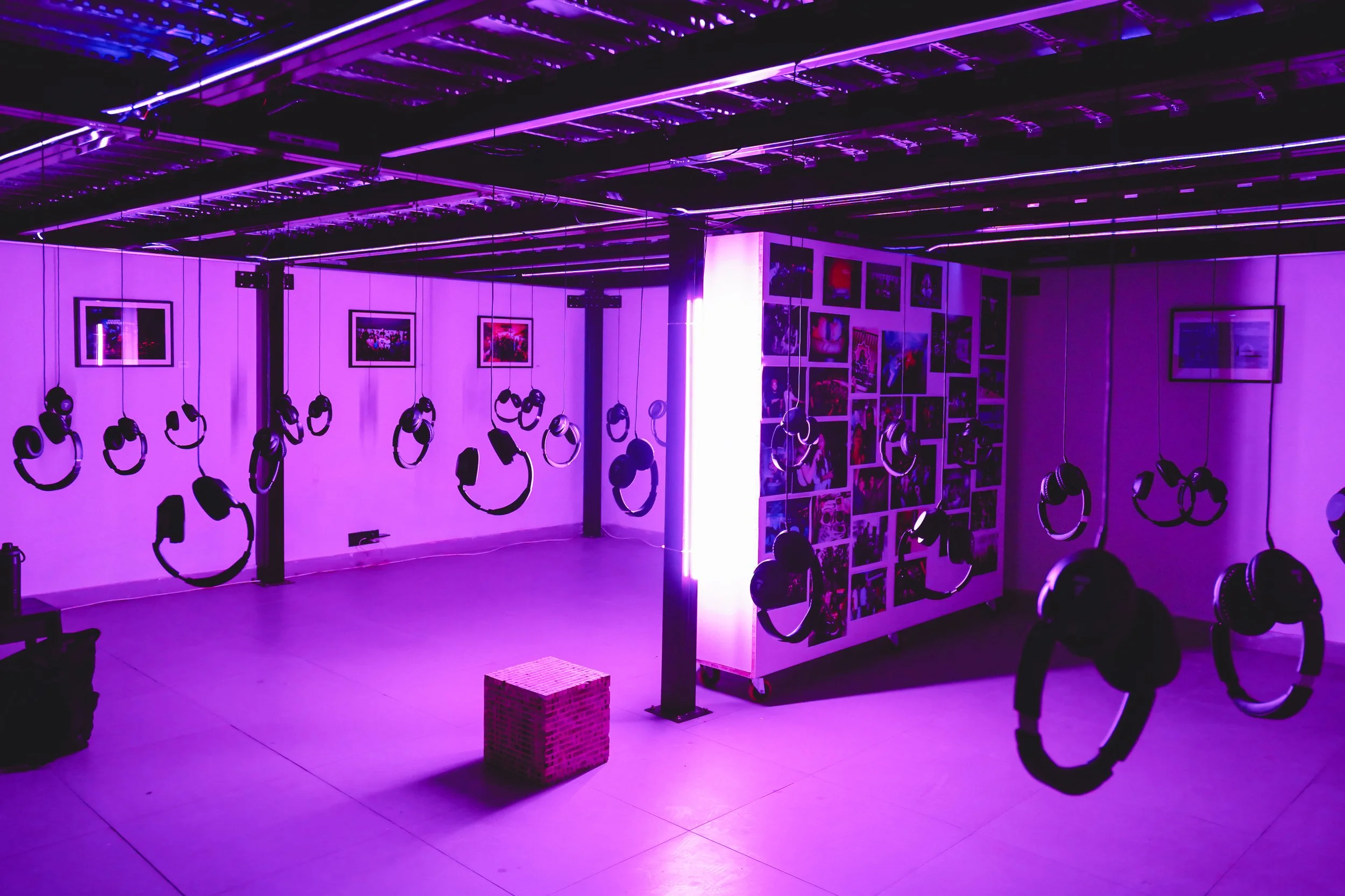
How Boxout.fm Built One of India’s Most Distinct Independent Music Communities

Founded in New Delhi in 2016, Boxout.fm has grown from an independent online radio station into one of India’s most respected community-driven music platforms. At a time when music discovery increasingly shifted towards algorithms and passive consumption, Boxout.fm carved out a different path — one rooted in human curation, local scenes and cultural exchange.

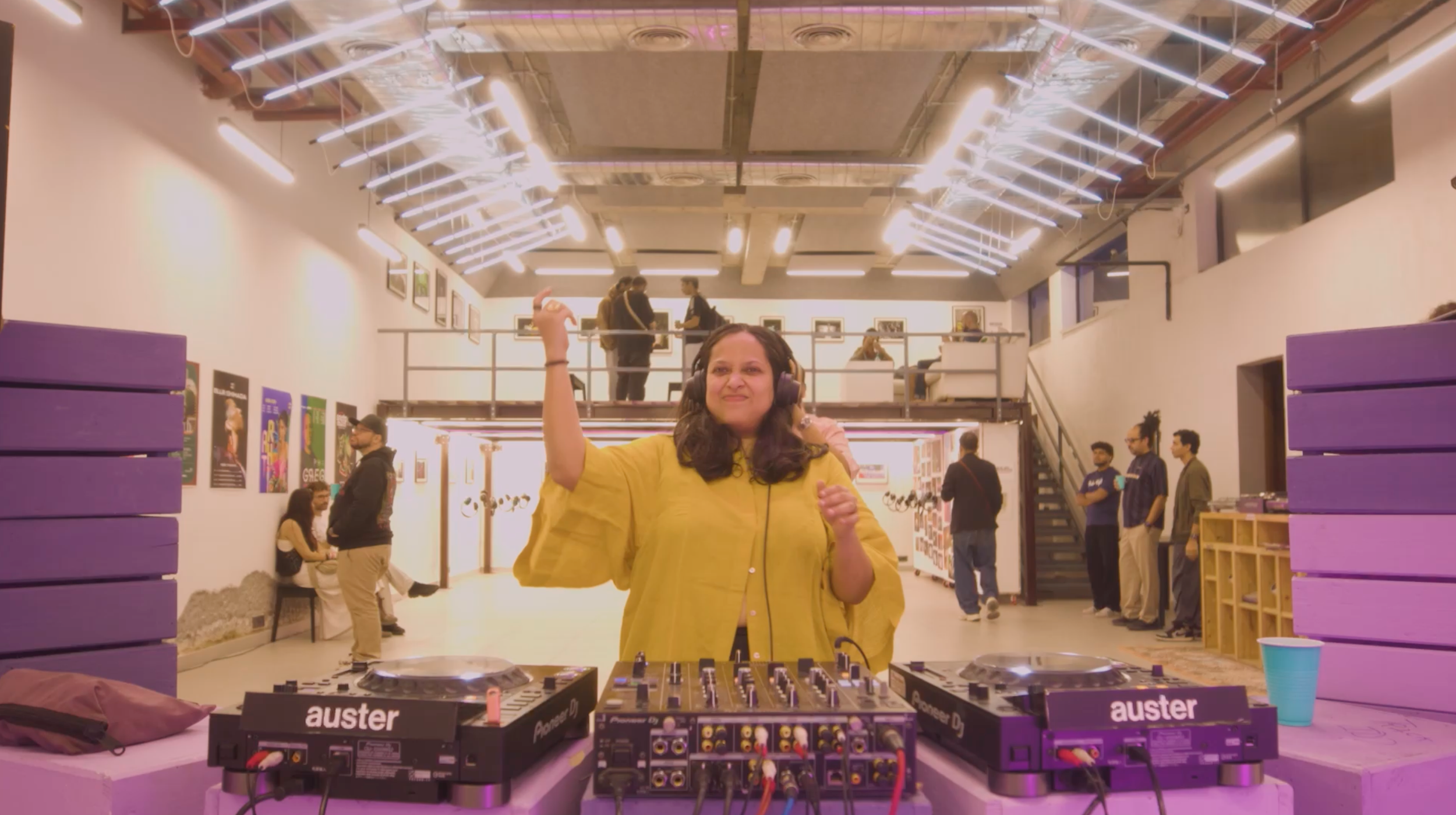
Through 24/7 programming led by DJs, selectors and radio hosts, the platform became a home for India’s non-mainstream music communities while documenting the country’s evolving underground music landscape in real time. Beyond radio, Boxout.fm expanded into physical spaces through projects like Boxout Wednesdays — now India’s longest-running midweek club night — alongside festivals including Jazz Weekender and Boxout Weekender, helping foster new communities around independent music and alternative culture.

Over the years, the platform has also developed international collaborations with organisations and platforms including Boiler Room, Worldwide FM, British Council and Goethe-Institut, connecting local artists and scenes in India with wider global audiences.

In 2025, Boxout.fm was selected as one of the recipients of the Ballantine’s True Music Fund powered by shesaid.so — an initiative supporting music communities, collectives and independent cultural projects through funding and mentorship. The support has contributed to the revival of Boxout.fm’s physical radio space, the development of new digital programming formats and the expansion of its long-term vision for community-driven storytelling and independent music culture in India.

In this conversation, Boxout.fm reflects on community-building, international collaboration, the evolving role of independent radio, and how platforms can continue creating meaningful cultural spaces in an increasingly fragmented digital landscape.

From Boxout Wednesdays to larger-scale projects like Jazz Weekender and Boxout Weekender, how have your events contributed to building a sustainable music community in India?

Mohammed Abood (Founder, Boxout.fm): Everything we've built at Boxout.fm has followed the same logic: the radio creates the community, the events give it a physical home.

Boxout Wednesdays became the cauldron through which a new and active music and art community was born. It was never conceived as a club night in the traditional sense — it was a weekly commitment, a proof of concept that there was an audience in India hungry for something more intentional than what commercial venues were offering. It became the longest-running midweek nightclub residency in the country. That kind of consistency over years is what builds real community — not one big moment, but hundreds of smaller ones stacked on top of each other.

Jazz Weekender grew out of the same instinct, but with a different ambition. The inaugural edition in 2022 was organised to celebrate International Jazz Day, showcasing some of the genre's most exciting Indian and international artists. What we wanted to prove with Jazz Weekender was that India had an audience not just for electronic music, but for the full spectrum of improvised, genre-crossing music — jazz, neo-soul, R&B, funk, fusion, Latin. The festival firmly established itself as a cornerstone of New Delhi's cultural calendar, attracting over 4,000 attendees across its editions. By its fourth edition in 2025, we had international headliners from across Europe, Latin America, and the Middle East sharing the stage under that banyan tree at 1AQ with some of India's most compelling live acts.

What makes these events meaningful beyond the numbers is the model. Boxout Weekender, unusually for a festival in India, always had an all-local lineup comprising a selection of our show hosts. That was a deliberate choice. We weren't just programming a festival — we were giving our community a stage and saying: you are the main act. The people who built their craft through Boxout.fm's radio are the same people who headline our events. That's what a sustainable ecosystem looks like. It's circular, not extractive.

The community doesn't just attend these events — it builds them, performs at them, and grows through them. That's the difference between a platform and a scene.

Boxout.fm has developed strong international partnerships over the years. How have these collaborations influenced your programming and expanded your reach beyond India?

MA: From the beginning, we were clear that being India-based didn't mean being India-only. The question we kept asking ourselves was: how do we make sure the music being made in this country reaches the rest of the world — and how do we bring the world back here in a way that enriches the community rather than just importing a brand?

As a forerunner in the space of collaboration, Boxout.fm expanded its reach across geographies with partnerships with longstanding institutions such as Institut Français' Fête de la Musique, Goethe Institut and the German Embassy, The British Council, Pro Helvetia - Swiss Arts Council, as well as younger cultural juggernauts like Boiler Room, Rinse France and Worldwide FM. Each of those partnerships had a distinct character. Working with Boiler Room in 2017 meant that the Indian underground was being seen by a global electronic music audience on the world's biggest broadcast platform for the culture. Working with the British Council meant we could fund genuine artistic exchange — not just a stream, but artists physically travelling, performing, recording and learning from each other.

The Delhi to Derry project was probably the clearest expression of what international collaboration means to us at its best. Six Indian artists from the Boxout.fm community were able to perform live sets to a new audience in the UK — some for the first time. The live-streamed showcase featured 18 live and DJ performances from New Delhi and just as many from Derry. That's reciprocity. It's not India being spotlighted as exotic — it's two electronic music communities recognising each other as peers and creating something together.

The Boxout In Transit series extended that logic geographically across Asia, taking the radio format to cities like Colombo, Karachi, Amman, Hanoi, Dubai, Kathmandu, Bangkok, and eventually Berlin — marking the first time the series ventured into Europe, in collaboration with Club Gretchen. Every stop was a chance to introduce a new city to what Indian independent music sounds like in 2024, and to bring that city's energy back into our programming.

The influence flows both ways. Artists from the Boxout.fm community have gone on to enjoy careers across Europe and Asia — Suchi, for example, gaining acclaim from Boiler Room and BBC Radio 1 Dance for her percussive grooves and dreamy breaks. That's what good international partnership produces: not just a one-off exchange, but actual career trajectories that wouldn't have been possible without the platform.

In 2026, as we rebuild and refocus, these global relationships remain our most valuable equity. They signal that Boxout.fm isn't simply an Indian story — it's a model for how a community radio built with integrity can carry the culture of its home city to the world.

You were selected for the True Music Fund in 2025. What were your expectations going into the programme, and how did the experience compare in reality?

Ayesha Dikshit (Associate Director, Boxout.fm):

Going into the programme, we initially saw the True Music Fund as a means to support a specific idea we had been developing around reactivating the Boxout.fm radio space. We expected it to help us execute that vision, both financially and in terms of visibility, and to provide a platform to bring the radio back into focus.

In reality, the experience expanded beyond that initial scope. While the financial support was important, the process gave us the room to adapt the idea as it unfolded, rather than feeling locked into a fixed outcome.

What stood out most was how the programme enabled a shift in perspective. Instead of thinking in terms of rebuilding something as it once existed, it encouraged us to move forward with a format that feels more responsive and open-ended. It also reinforced the value of creating work that can exist across multiple touch-points, rather than being tied to a single space or structure.

In that sense, the experience was not just about delivering a defined end result, and more about setting a direction for how Boxout.fm can continue to grow, now and into the future.

How did the True Music Fund support your development—whether financially, strategically, or through network access—and what impact has that had on your work since?

AD: The True Music Fund played a really important role in helping us bring Boxout.fm back in a way that actually makes sense for how people engage with music today. We didn’t end up building a permanent physical radio space, but we were able to bring back the spirit of radio through digital formats unfolding in unconventional spaces.

We hosted a series of radio pop-ups, including a collaboration at Method Delhi (A contemporary art gallery in New Delhi) as part of our Nine Lives exhibition. We hosted over 15 artists across a wide spectrum of sounds and practices, reflecting the diversity and inclusivity that sits at the core of Boxout.fm. And started putting out content on YouTube, using video as the main format to reimagine what radio can look like today which enabled us to transform the project in a way that feels aligned with how music is now consumed across various digital platforms. 

Beyond the immediate programming, the fund has helped us lay the groundwork for the next phase of Boxout.fm. We’re now working towards bringing the radio player back onto our website, which will further strengthen the connection between our broadcast roots and our evolving digital format.

This process has allowed us to explore radio in a more fluid way, not tied to a single format or space, but something that can evolve across platforms while still staying rooted in independent music.


Applying for the True Music Fund? Get Inspired by 2023 Winners Feminine Hi-FI!

Feminine Hi-Fi, founded in 2016, is led by DJ Dani Pimenta and singer/MC Laylah Arruda.

In their show, the duo takes a deep dive into the connections between reggae/dub and the unique sound of Brazilian bass culture. The result is a musical selection full of energy and originality, with classics and novelties, and flavored by releases from the Feminine Hi-Fi Records label.

In 2023, they were the only Latin American project selected by Ballantine's UK True Music Fund programm

The collective carries out affirmative actions to strengthen the female presence in music, producing face-to-face and virtual events with artists from all over the world. Since 2022, it has organised the Feminine Hi-Fi Festival, a festival dedicated to dub and sound system culture that has brought together dozens of Brazilian and international artists. They are part of the Directorio de Agrupaciones de Mujeres y/o Personas LGTBIQ+, led by BIME, Femnoise and Sorority Lab.

In 2022, they won the Equal Seal by WME, an initiative of the Women's Music Event award aimed at projects that value diversity and inclusion. They are part of Sonic Street Technologies, a Goldsmiths University of London project aimed at researching and valorising sound system culture around the world.

Over the years, the project has been present at the main festivals, parties and concert halls in Brazil and Europe. They have toured internationally five times, in countries such as France, Germany, England, Italy, Switzerland, Belgium, Spain and Ireland.  

Read more about how the True Music Fund supported them—maybe your project could be next!


How did receiving the True Music Fund support your project or career?

For us, being able to count on mentoring and all the guiding dialogues for the project was very relevant and satisfying. We had the opportunity to present the particularities of our country, Brazil, our city, São Paulo, as well as the music scene we are part of, and we had guidance that took this into consideration. I think the main thing was the security we felt with this path and the lessons we could take with us to continue Feminine Hi-Fi's activities.

What would you say to artists thinking about applying for the fund?

We were able to achieve something great, move our community, amplify our existence and ideologies.
And especially speaking of our country, so culturally known worldwide, but which suffers from the lack of public and private investment in culture. It was even a source of pride for us to have been selected here in Latin America, in Brazil.


Check out our FAQ for answers to key questions, including:

- Who can apply?

- How much funding can I request?

- How are applications selected?

Head to the full FAQ here 👇

https://www.shesaid.so/true-music-fund

** For additional questions, contact hello@shesaid.so